Assisted Living is a residential facility that offers assistance with daily activities for people who are able to get around independently. They provide a home like environment to promote residents independence. Every community offers different levels of support, so it’s important to understand the level of care your loved one needs now as well as what health conditions may need further assistance in the future.

Residential Care Homes also known as care homes are a unique type of care. These homes are more “care focused” and are generally for residents needing more consistent hands-on care. The majority of these homes have a caregiver to resident ratio of 1-3 or smaller.
These are homes, much like yours or mine, that have been modified to allow seniors to age in place. These residential care home (also known as a personal are home) is a private residence most often within a subdivision that provides personal care services, assistance and supervision to four or more persons. They offer a smaller, more intimate / homelike setting, ideal for persons who might not do well with the larger assisted living facilities. They typically provide meals, laundry, housekeeping, medication supervision, assistance with activities of daily living and activity programs.
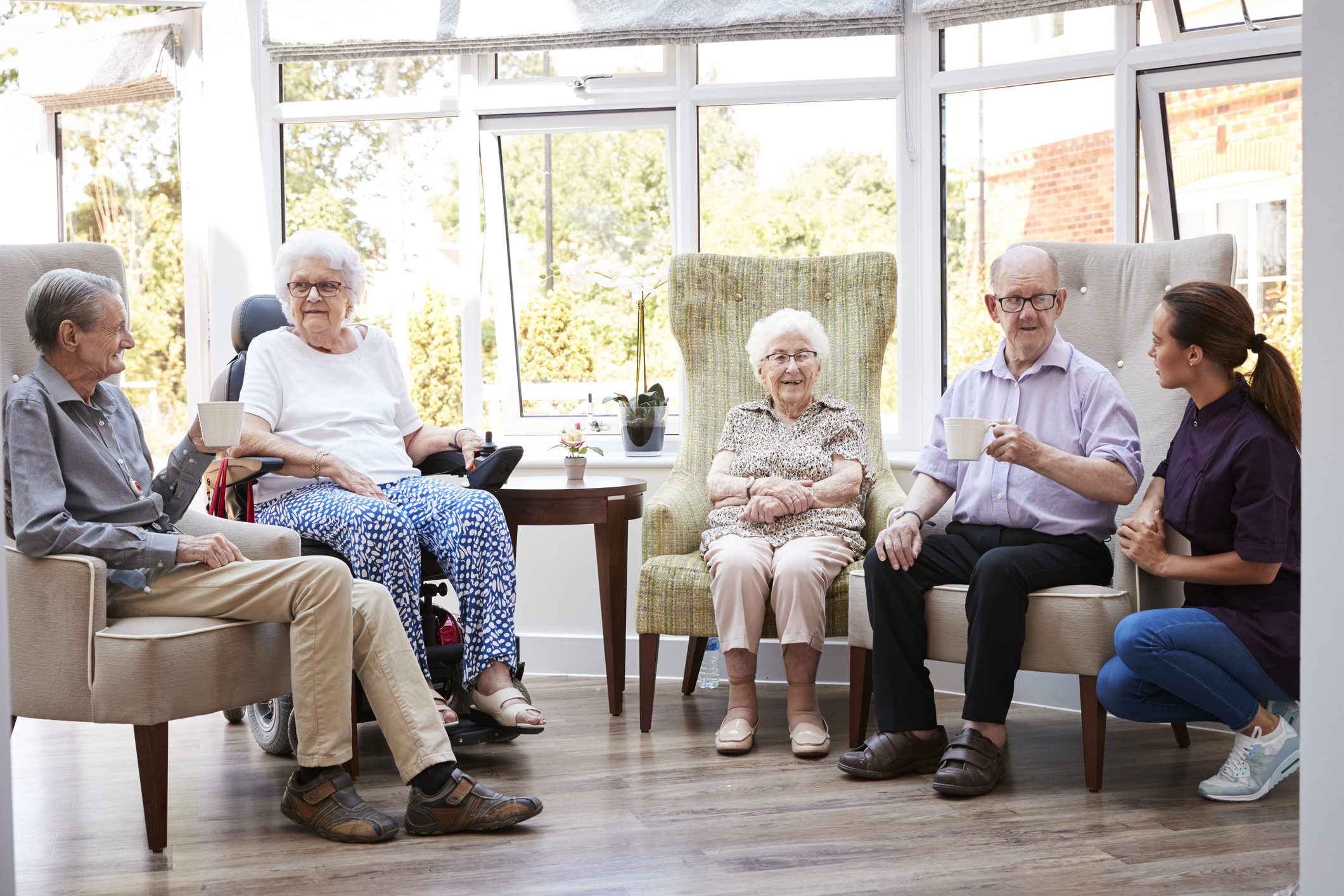
What is memory care? An Alzheimer’s & Dementia Memory Care Community is for people with middle to late stage memory conditions. Often located within larger assisted living facilities or in smaller residential settings, memory care facilities offer special needs and dementia care. They may also have the actual building set up to enhance memory functions and to decrease potential confusion for memory care residents. These secure environments often have additional safety features and clearly designated walking paths.
Activities focused on memory recall from past experiences are staples of activities in most memory care communities. While specific amenities, activities, and service options vary depending on location, the memory care units in many facilities help their memory care residents stay engaged and active in a structured environment with communal dining, brain games, art classes, music, physical therapy, fitness classes, and many other opportunities for social interaction.
Patients who are appropriate for this setting are usually those that are already residing in an assisted living environment who have begun forgetting how to perform daily activities of life or who have been getting lost, wandering about, or going into other residents’ rooms thinking it was their own. A daily routine in a structured environment has been proven to help cope with the early stages of memory loss.
Memory care special licensing is required in certain states.

Residential Care Homes also known as care homes are a unique type of care. These homes are more “care focused” and are generally for residents needing more consistent hands-on care. The majority of these homes have a caregiver to resident ratio of 1-3 or smaller.
These are homes, much like yours or mine, that have been modified to allow seniors to age in place. These residential care home (also known as a personal are home) is a private residence most often within a subdivision that provides personal care services, assistance and supervision to four or more persons. They offer a smaller, more intimate / homelike setting, ideal for persons who might not do well with the larger assisted living facilities. They typically provide meals, laundry, housekeeping, medication supervision, assistance with activities of daily living and activity programs.

Respite care is a short-term stay in an assisted living facility designed to provide relief for primary caregivers. It can help relieve stress and give the caregiver time for self-care or simply take a much-needed break from caregiving duties.
One of the primary purposes of respite care is to alleviate caregiver burnout. Caregiver burnout is a state of physical, emotional, and mental exhaustion. It can be caused by undertaking too much responsibility or caring for someone over an extended period of time without adequate support.